

 See My Latest Article on HelloNation
What does lawn aeration do?
Lawn aeration loosens compacted soil by creating small openings that allow air, water, and nutrients to reach grass roots. It also gives roots more room to grow, which can improve turf density, drainage, and tolerance to summer stress.
Soil becomes compacted when particles are pressed tightly together. Regular foot traffic, children’s play, pets, mowing equipment, construction activity, and wet-weather work can all contribute. Clay-heavy or silty soils are especially prone to compaction, and many residential lawns in Tippecanoe County, IN experience these conditions.
Aeration is different from dethatching. Dethatching removes a dense layer of dead stems and roots near the soil surface, while aeration opens the soil beneath the grass. A lawn may need one service, the other, or both.
How can you tell if a lawn needs aeration?
A lawn may benefit from aeration if water runs off instead of soaking in, grass becomes thin despite reasonable care, or the soil feels hard and difficult to penetrate.
Common signs include:
- Puddles that remain after ordinary rainfall
- Thin or bare areas along walkways, play areas, and driveways
- Grass that dries out quickly during warm weather
- Heavy thatch or weak root development
- Soil that is difficult to push a screwdriver or garden fork into
- Visible wear in areas used frequently by people or pets
- Uneven grass growth after fertilizing or watering
A simple test is to push a screwdriver into moist soil. If it enters easily several inches, compaction may be limited. If it stops quickly or requires strong pressure, the area may need attention.
Testing should be done when the soil is moist but not saturated. Very dry soil is hard to penetrate even when it is not severely compacted, while wet soil can smear and become more compacted through foot or equipment traffic.
When is the best time to aerate in this region?
The best time depends on the type of grass. Cool-season turf generally responds most effectively during periods of active root growth in early fall. Spring can also work, especially if the lawn has obvious compaction, but fall usually offers better recovery and less heat stress.
For common cool-season lawns, useful timing often falls within these general windows:
- Early fall, after the hottest summer conditions have eased
- Spring, once the soil has dried enough to support equipment without smearing
- Avoidance of periods when the lawn is dormant, waterlogged, or under severe heat stress
In Tippecanoe County, changing spring temperatures and wet soil can make timing more important than the calendar date. Aerating soil that is saturated can damage its structure. Waiting several days after heavy rain is often wise, particularly in low areas or yards with poor drainage.
Fall aeration is frequently paired with overseeding because newly planted grass seed can settle into the openings and gain better contact with the soil.
How should a homeowner aerate a lawn?
For a typical residential lawn, core aeration is usually more effective than simply poking holes with a solid tine. A core aerator removes small plugs of soil, creating channels that remain open longer and reduce compaction more effectively.
Before starting, mark sprinkler heads, shallow utility lines, landscape lighting, invisible pet-fence wires, and other buried features. Remove toys, stones, hoses, and debris from the lawn.
The basic process is:
1. Mow the grass slightly shorter than usual, but do not scalp it.
2. Water lightly one day beforehand if the soil is dry.
3. Make passes across the lawn, then make a second pass at a different angle if compaction is severe.
4. Focus additional attention on high-traffic areas, but avoid excessive disturbance.
5. Leave the soil plugs on the lawn so they can break down and return organic matter to the surface.
6. Overseed afterward if the lawn is thin and the grass type is suitable for the season.
7. Keep newly seeded areas consistently moist until germination and establishment.
A core aerator should not be used on soil that is muddy. The machine may create smeared walls around the holes and leave deep ruts. Soil that is slightly moist and crumbly is usually easier to work.
Can aeration be done without a machine?
Small sections can be aerated with a manual core aerator or garden fork, but the work is slower and less uniform. Footwear with spikes is generally less useful than many homeowners expect. Spike tools push soil sideways rather than removing it, and they can increase compaction around each hole.
Manual tools make sense for narrow areas, small lawns, or isolated compacted spots. For a larger yard, a core aerator creates more consistent coverage and reduces the chance of treating only the most visible areas.
Aeration is also not a substitute for correcting drainage problems. If water collects because of a low grade, blocked outlet, downspout discharge, or poorly shaped landscape, opening the soil may provide only temporary improvement.
What should be done after aeration?
The first priority after aeration is to protect the openings from being crushed immediately. Avoid unnecessary traffic for several days, especially if the soil is damp.
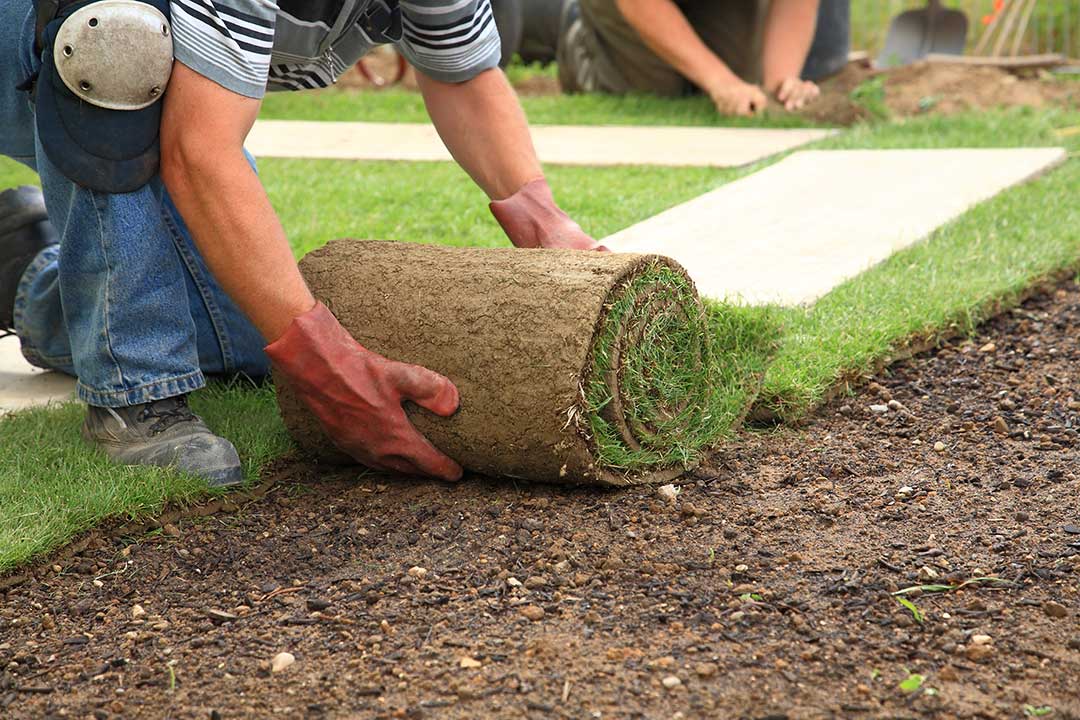
If overseeding, spread seed soon after aeration while the holes are open. Use grass seed suited to the existing lawn and the growing season. Seed should be kept evenly moist, but frequent shallow watering should gradually be reduced as roots develop.
Fertilizer is not automatically required after aeration. A soil test can show whether nutrients or pH adjustments are actually needed. Applying fertilizer without testing may waste material or create an imbalance.
Continue mowing as needed, but never remove more than roughly one-third of the grass blade at a time. Sharp mower blades produce cleaner cuts and reduce stress while the lawn recovers.
How often should a lawn be aerated?
Many lawns need aeration once a year, while others may need it only every two or three years. Frequency depends on soil type, traffic, drainage, grass condition, and whether compaction returns quickly.
Annual aeration may be reasonable for:
- Lawns used heavily by children or pets
- Turf established over compacted construction soil
- Areas with frequent vehicle or equipment traffic
- Heavy soils that become hard and slow-draining
- Lawns repeatedly showing thin growth despite adequate moisture
A lightly used lawn with healthy roots and good drainage may not need yearly treatment. Aerating simply because the calendar says so can disturb a lawn unnecessarily.
What mistakes should be avoided?
The most common mistake is aerating at the wrong soil moisture level. Muddy soil can become more compacted, while bone-dry soil can be too hard for effective core removal.
Other problems include:
- Aerating dormant or heat-stressed grass
- Failing to mark buried irrigation or utility features
- Using only shallow spike holes on severely compacted ground
- Expecting aeration to solve standing-water problems caused by grading
- Overseeding with grass that does not match the lawn’s growing conditions
- Driving heavy equipment repeatedly over the same wet areas
- Applying fertilizer without understanding the soil’s actual needs
Aeration works best as part of broader lawn care that includes appropriate mowing height, careful watering, balanced fertility, and attention to drainage. In local neighborhoods, treating compacted walkways, play zones, and frequently traveled strips may provide more benefit than aerating every part of the lawn equally.