

 See My Latest Article on HelloNation
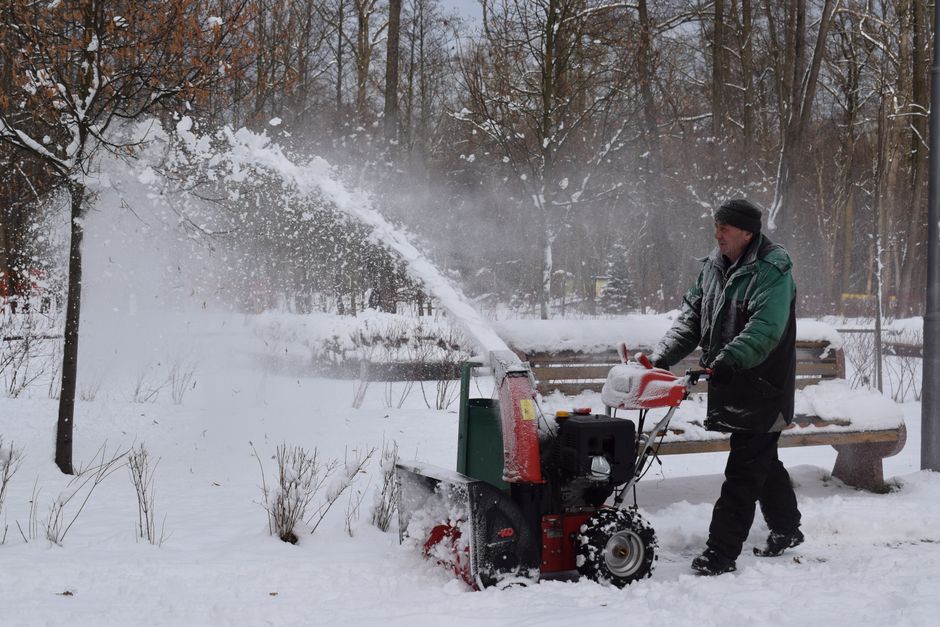
Choosing between snow plowing and snow blowing depends on the size of the area, the depth and weight of the snow, available storage space, and how quickly the surface needs to be cleared. For many area households, the most practical approach is not choosing one method exclusively, but matching the equipment to the conditions.
Which method works better for a typical driveway?
For a standard residential driveway, a snow blower is often the more precise choice, while a snow plow is usually faster for broad, open surfaces. A blower removes snow by lifting it and throwing it to the side. A plow pushes snow into a bank along the driveway edge.
Snow blowing tends to work well when:
- The driveway is narrow, curved, or surrounded by landscaping
- Snow needs to be moved well away from the pavement
- The surface is too small to justify large equipment
- Several inches of snow have accumulated
- Snow must be cleared from walkways, steps, or tight areas
Plowing is generally more efficient when:
- The driveway is long, wide, or mostly straight
- Snow is deep, wet, or heavy
- The priority is reopening the drive quickly
- There is adequate room along the sides for snow storage
- The surface is part of a larger private lane, parking area, or shared access route
A plow may clear a large area in fewer passes, but it does not make snow disappear. The pushed snow must go somewhere, and banks can become a problem after several storms.
What is the difference between snow plowing and snow blowing?
Snow plowing pushes snow across the surface with a blade. Snow blowing uses an auger and impeller to collect snow, break it up, and discharge it through a chute.
Plowing is usually faster because it moves snow in a continuous direction. It is well suited to large paved areas and open drives. However, plows can leave a thin layer of packed snow, especially when the pavement is uneven or temperatures are near freezing.
Snow blowers offer greater control over where snow is placed. That matters on properties with sidewalks, shrubs, retaining walls, parked vehicles, or limited side clearance. A blower can also clear a path through areas where a vehicle-mounted plow cannot maneuver.
Neither method completely prevents ice. Both may leave a slick surface if snow melts and refreezes. Clearing early, improving traction, and addressing drainage are often just as important as the equipment used.
Is snow blowing better for heavy or wet snow?
Heavy, wet snow can be difficult for both methods, but a properly sized snow blower may handle it better in tight residential spaces. Wet snow is dense and can clog smaller machines, especially if it is allowed to sit and partially freeze.
A plow can move wet snow quickly, but deep piles may become difficult to push. Repeated passes may be needed, and snowbanks can become compacted and heavy. If the storm includes sleet or a layer of frozen slush, a plow may scrape the surface more effectively than a blower.
A useful rule is to clear in stages during a long storm rather than waiting for the entire accumulation to end. Removing moderate amounts several times reduces strain on equipment and prevents a dense bottom layer from bonding to the pavement.
Which option is safer for sidewalks and walkways?
Snow blowing is usually the better option for sidewalks, front walks, steps, and narrow paths. A plow is designed to push snow forward, so it has limited usefulness in areas that are too narrow for the vehicle or where snow cannot be piled at the end.
Walkways also deserve attention because packed snow can quickly become ice. Clearing down to the pavement is helpful, but scraping too aggressively can damage some surfaces. On gravel, loose stone may be pulled into the snow or thrown by a blower. On concrete and asphalt, raised edges, cracks, and uneven sections can damage equipment or create trip hazards.
Shoveling may still be necessary around door thresholds, steps, gates, mailbox areas, and other places where neither a plow nor blower can reach safely.
How does driveway layout affect the decision?
Property layout is often more important than snowfall totals. A broad driveway with open lawn on both sides gives a plow plenty of room to push snow. A narrow drive bordered by fences or landscaping may be easier to manage with a blower.
Consider these conditions:
- Limited side space: A blower can send snow farther from the driving surface.
- Long straight driveway: A plow can reduce clearing time.
- Circular or curved drive: Either method may work, but a blower offers more control near landscaping.
- Gravel surface: A plow must be adjusted carefully, and a blower may pick up loose stone.
- Steep slope: Traction and visibility become major concerns; pushing large amounts of snow downhill can create unsafe piles.
- Shared driveway: Snow should be placed where it will not block another household or narrow the travel lane.
Before the first storm, mark low obstacles such as landscape borders, utility covers, irrigation components, and raised pavement edges. Snow can hide these hazards.
What should residents know about roads, sidewalks, and snow placement?
Private snow removal is different from public road clearing. State and local road crews handle public routes according to priority, weather conditions, traffic needs, and available equipment. Residential driveways and private walks remain the property owner’s responsibility.
Snow removed from a driveway or sidewalk should not be pushed into a public roadway. That snow can refreeze, create ridges, interfere with traffic, or be pushed back across the driveway by passing equipment. It is safer to place snow on the property, away from drainage paths, sight lines, fire access points, and pedestrian routes.
Sidewalk responsibilities may vary by local ordinance, but property owners and occupants should plan to clear adjacent walks promptly after a storm. In Tippecanoe County, changing temperatures can turn loose snow into packed ice, particularly during repeated freeze-and-thaw cycles.
Is a snow blower worth it for occasional storms?
A snow blower may make sense for households that regularly clear several areas or have limited snow-storage space. It is less useful if the driveway is very small, storms are infrequent, or storage and maintenance are difficult.
The real cost is not only the purchase price. A blower also requires fuel or charging, seasonal maintenance, safe storage, and time to inspect belts, shear pins, paddles, tires, and the discharge chute. Equipment should be operated only according to its instructions, and the machine should be turned off before clearing a clog.
A plow attachment can be efficient for large private drives, but it requires a suitable vehicle, adequate traction, and enough room to maneuver. It may also increase wear on the vehicle and can damage pavement or hidden obstacles if used carelessly.
Which method is right for most households?
Snow blowing is usually the better fit for smaller or complicated residential properties, especially where snow must be placed carefully. Snow plowing is usually preferable for long, open driveways and larger private areas where speed matters.
A combination approach is often practical: plow the main driving surface, then use a blower or shovel around steps, walkways, garage doors, and areas where snowbanks would restrict access. Regardless of the method, clear before snow becomes compacted, keep drainage routes open, and leave enough room for additional storms.
The best choice is the one that matches the property’s layout, the equipment’s capabilities, and the resident’s ability to operate it safely in cold, low-visibility conditions.